
.svg)


The Planetary Society
Promoted on Sunday, Fired on Monday: Inside a NASA Office's sudden closure
As thousands leave the space agency, two ex-NASA workers give an inside account of how their office was abruptly shut down.


 NSTA-CBC · Winner
  ILA · Honor
  Ezra Jack Keats · Nominee
  Sakura Medal · Finalist
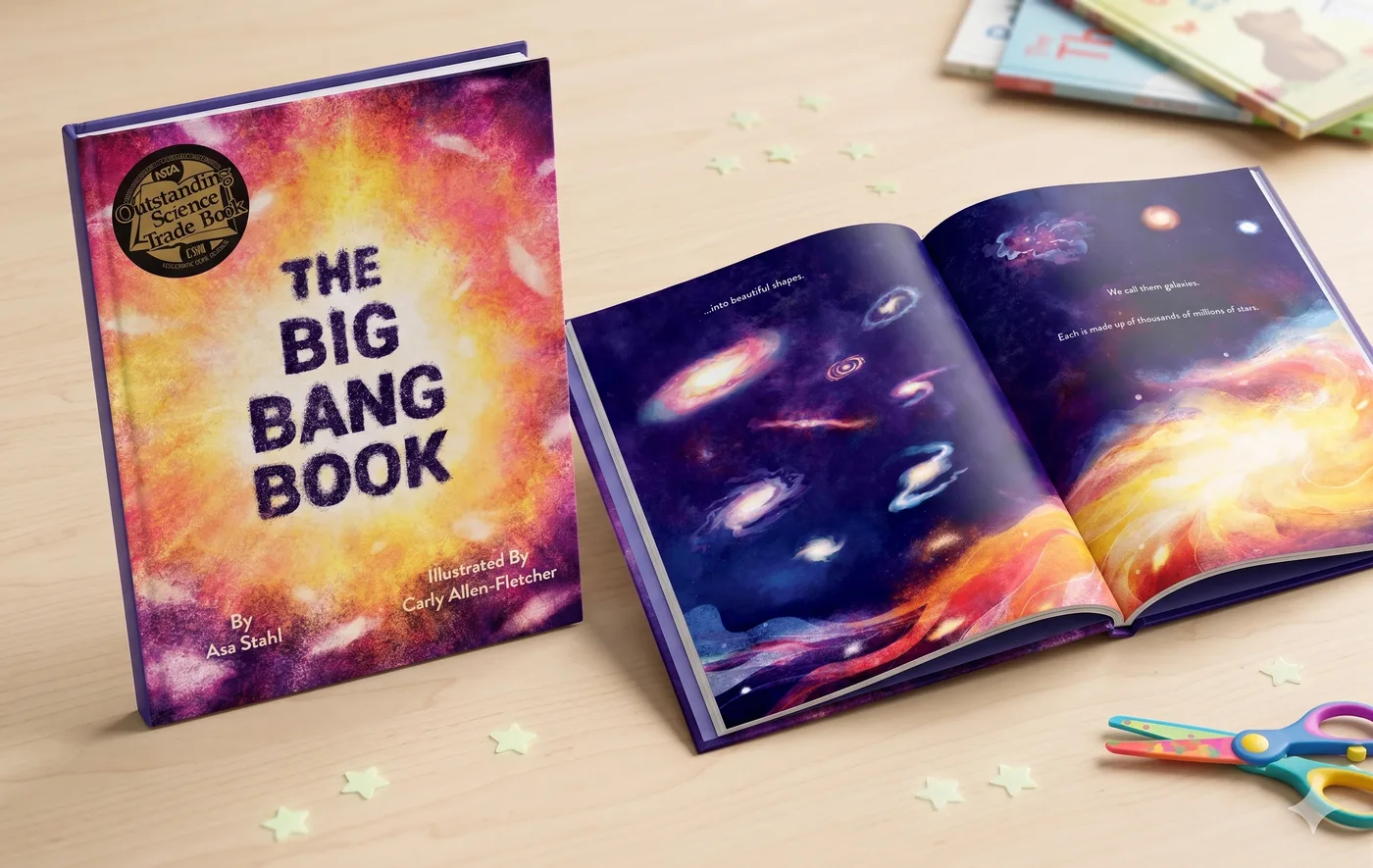
  Booklist · ★ Starred Review
 Introducing the wonders of our universe to the youngest readers.
"Suffused with awe, astrophysicist Stahl's well-chosen words, tightly paired with Allen-Fletcher's jewel-toned galactic pictures, aim to capture something of the mind-blowing scope of the big bang."
"A stately recap drawing on current physics and astronomy and appropriately cognizant of their limitations."

A tour of worlds beyond the Sun, in search of a perfect picnic spot.
"Wonderfully clever...The author, a PhD student in astrophysics, has a contagious enthusiasm for the subject that even extends to the back matter...Perfect for fans of space, adventures, and daring picnics."
"Too far to go in a spaceship but just right for a flight of imagination."


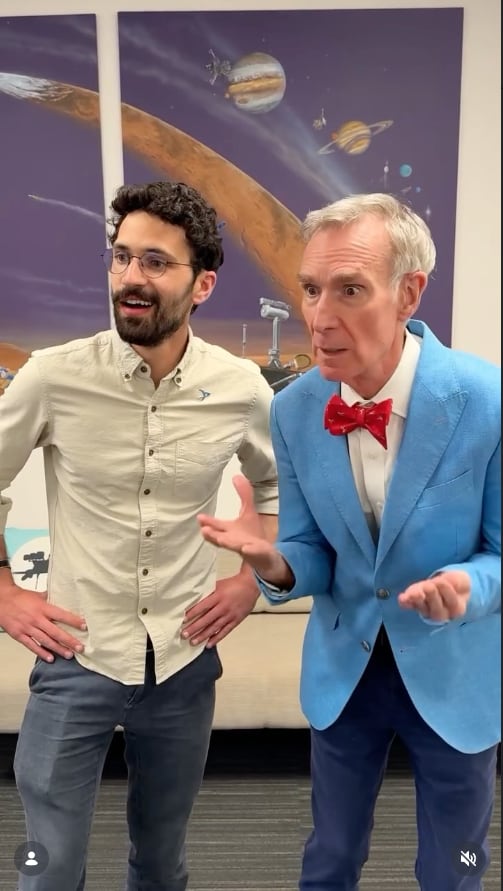
Together with Bill Nye and Ambre Trujillo, I host pop astronomy videos that connect an audience of nearly 1 million followers and subscribers with the wonders of space. On behalf of The Planetary Society, we offer stories of cosmic exploration and a trusted source for breaking news on anything space science or space policy.

2x Nominated, 1x Honoree


In the past twenty years, scientists have discovered thousands of planets around other stars. Many are unlike any of the worlds in our Solar System, and a fraction might be hospitable to life. But almost all of these planets have something in common: they are old — billions of years old.
This revolution is giving us a chance to discover where we come from, how we got here, and whether we are alone in the universe. But trying to uncover how planets evolve using only these worlds is like trying to guess how babies grow into teenagers, when all you have to study are middle-aged adults.
That's why I spent my PhD developing tools to discover newborn planets around very young stars. This work, which would help provide a direct window into how planets form, earned me the Kevin E. Strecker Award and the William & Elva Gordon Fellowship. Though the team continues its research, my tools have already helped another group characterize a newfound young planet about the size of Jupiter. If the Sun were age 40, this baby world would be about 5 weeks old.


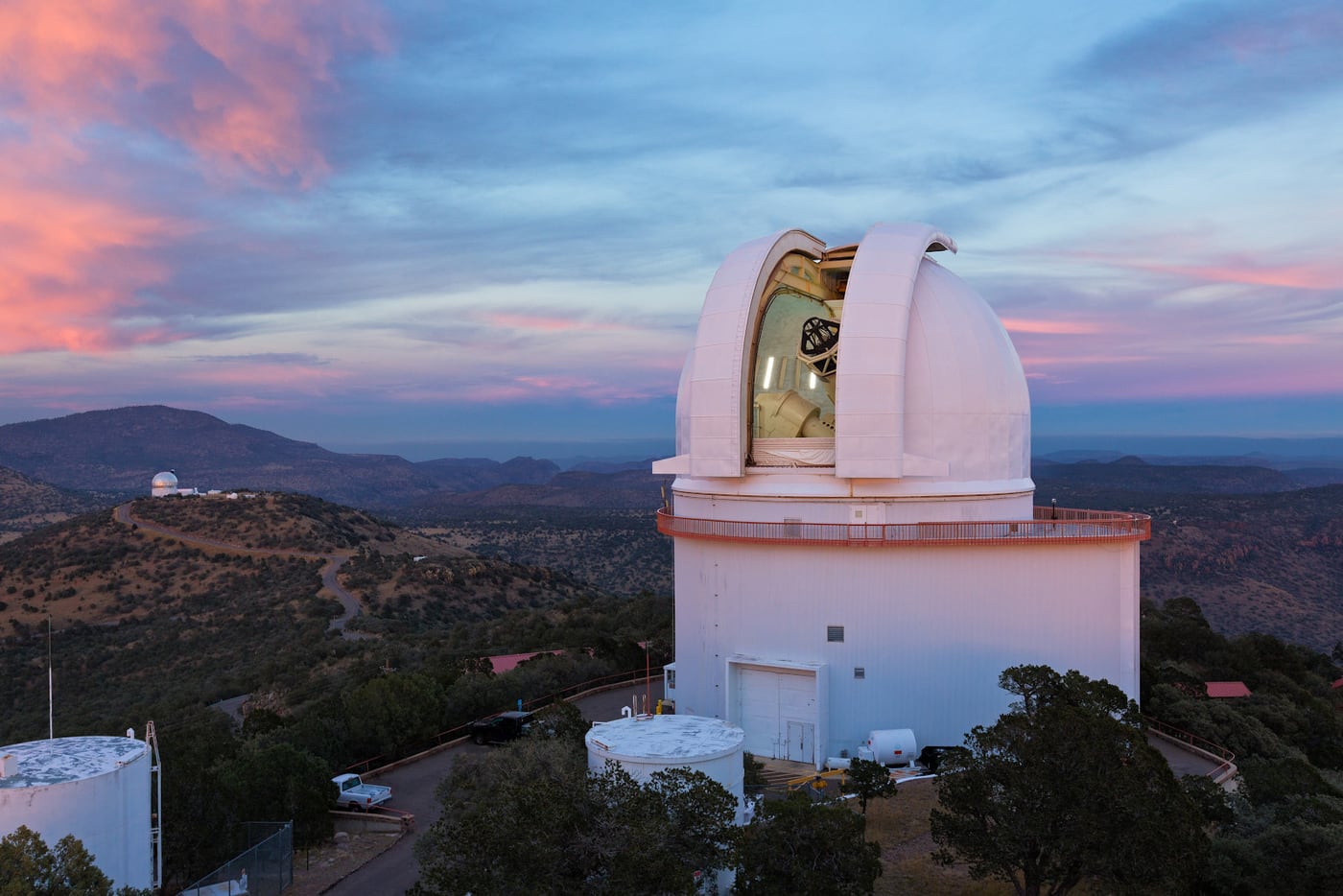
The main observatories I've relied on: McDonald Observatory's Harlan J. Smith Telescope, NASA Infrared Telescope Facility, and the Lowell Discovery Telescope. Bottom right: In the control room at McDonald. Image credits: Ethan Tweedie Photography, International Gemini Observatory/NOIRLab/NSF/AURA/ T. Slovinský, Jeremy Perez.

As thousands leave the space agency, two ex-NASA workers give an inside account of how their office was abruptly shut down.

A strange rock on Mars is different from anything we've seen before in the search for life.

Distant worlds could revolutionize our understanding of the Solar System and its ancient past.
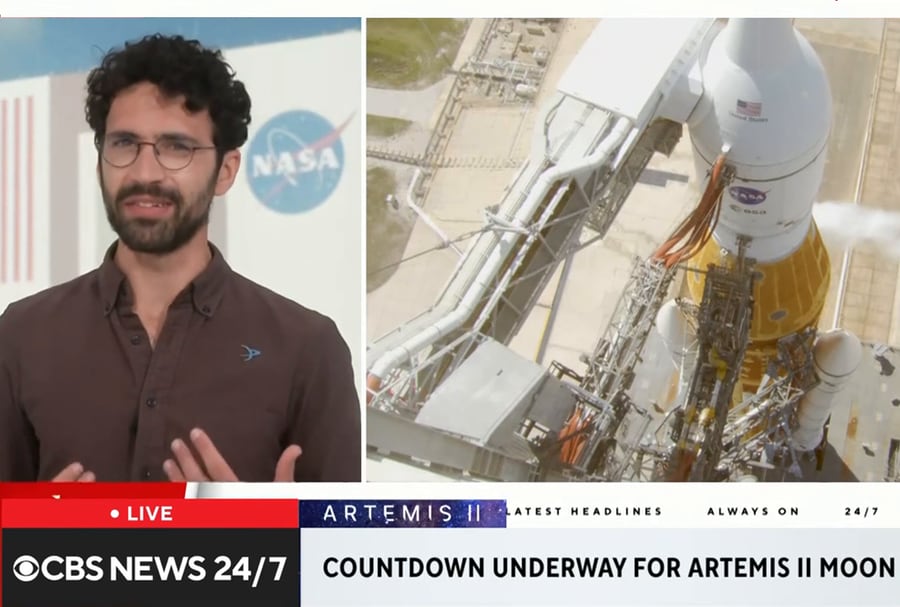
I help news outlets cover astronomy and space exploration, offering comment on the latest discoveries and space missions. I appeared on ABC World News Tonight with David Muir for the most-watched live coverage of Artemis II's splashdown, have spoken on CBS and Good Morning America, and have been quoted in The Atlantic, Undark, and USA Today, among others.
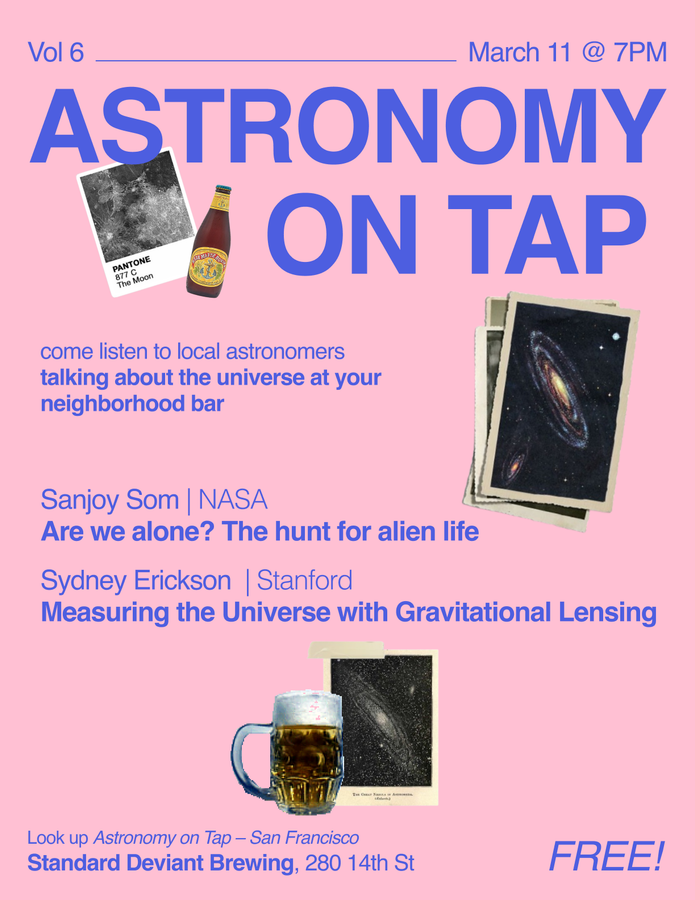
In my spare time, I organize and emcee Astronomy on Tap San Francisco: a free public lecture series where astronomers give short, laid-back talks over drinks at local bars. No science background is required, and the talks are meant for everyone and anyone.
I am available for school visits upon request, including classroom sessions, grade-level assemblies, family nights, and virtual visits.
What students do: Interactive read-aloud; "zoom out" by placing pre-cut picture cards along a floor line; "Question Ticket" exit slip.
Learning targets: Students identify simple sky patterns (day/night, stars at night), ask and refine questions like scientists, and use a 'zoom-out' model to locate Earth in space.
NGSS: 1-ESS1-1; SEP: Asking Questions, Developing and Using Models; CCC: Patterns, Scale
What students do: Interactive read-aloud; "Good Picnic/Bad Picnic" sort for different worlds; optional quick draw of an invented world.
Learning targets: Planets and moons have different surfaces/atmospheres; we use observations and comparisons to explain our choices; we can locate Earth in space with a simple "zoom-out" model.
NGSS: 1-ESS1-1; SEP: Analyzing & Interpreting Data; Developing & Using Models; CCC: Systems, Scale
What students do: Progressive "zoom-out" with markers; cosmic scale walk; lasso galaxies in the sky.
Learning targets: Use scale models; identify patterns in the night sky; explain why the Sun appears the way it does.
NGSS: 5-ESS1-1; MS-ESS1-2 & MS-ESS1-3 (optional); SEP: Developing & Using Models; Analyzing & Interpreting Data; CCC: Scale, Patterns
What students do: Teams roll dice to determine their planet's star (size/temp/age), orbit (distance, eccentricity optional), and bulk qualities (mass/atmosphere) to design a plausible world; gallery walk; compare to real finds (lava worlds, evaporating atmospheres, rogue planets).
Learning targets: Use models to predict surface conditions; explain how observations (transits, direct imaging) reveal properties; connect evidence to claims.
NGSS: 5-ESS1-1, MS-ESS1-2, MS-ESS1-3, MS-PS2-4; SEP: Developing & Using Models, Constructing Explanations; CCC: Cause & Effect, Scale